Whispers of the World: How Quiet Journeys Unlock Deeper Travel
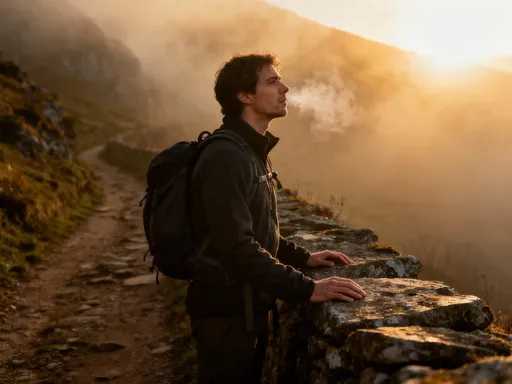
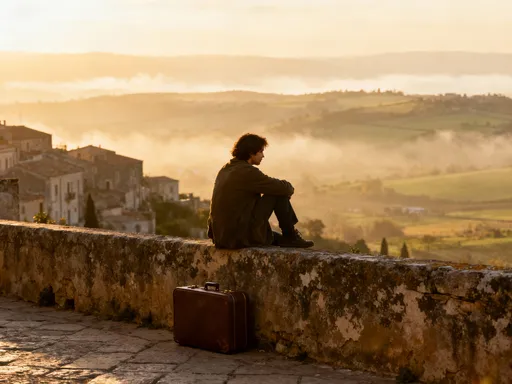
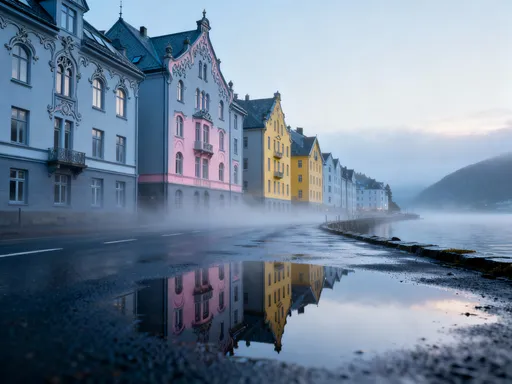
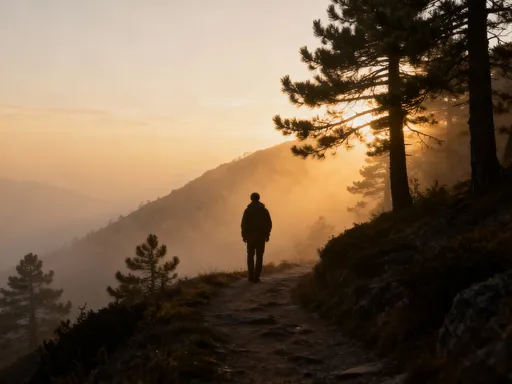
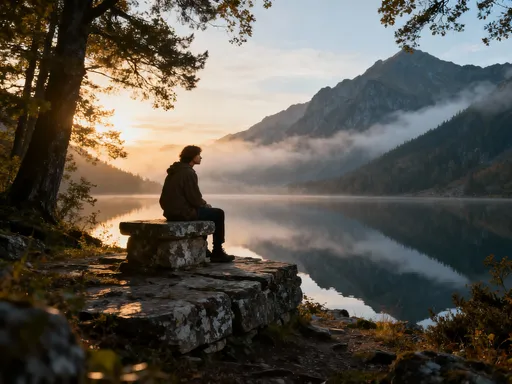
Travel is no longer about ticking landmarks off a list. Today’s mindful explorers seek transformation, not just destinations. In a world buzzing with over-tourism and digital noise, the most rewarding trips emerge from stillness, intention, and authenticity. This journey inward begins with choosing places that breathe, not shout. From mist-wrapped mountain villages to sunlit coastal trails unknown to crowds, the magic lies in presence. The soft rustle of leaves, the rhythm of daily market life, the unspoken warmth in a local's smile—these are the moments that linger long after the photos fade. This guide reveals how to design travels that restore wonder, enrich perspective, and deepen connection—one deliberate step at a time.
The Stillness Imperative
Quiet travel is not simply the absence of noise; it is the presence of awareness. It represents a conscious shift from the hurried pace of checklist tourism to a more immersive and reflective way of moving through the world. In recent years, researchers in environmental psychology have demonstrated that natural settings with low sensory overload—such as forests, lakesides, and remote highlands—allow the brain to restore attention and reduce mental fatigue. According to a 2021 study published in the Journal of Environmental Psychology, participants who spent time in low-stimulation environments showed a 30% improvement in memory recall and emotional regulation compared to those in urban tourist zones. This suggests that less can indeed be more when it comes to meaningful travel.
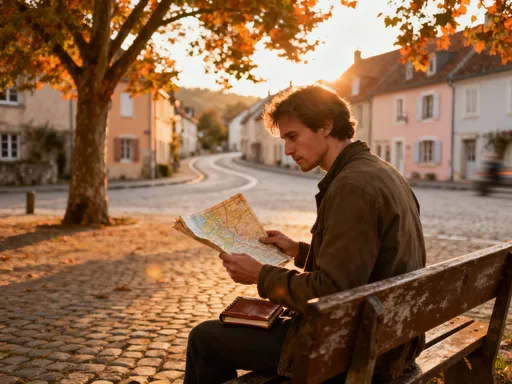
The modern traveler often falls into the trap of over-scheduling—jammed itineraries that move from museum to monument to market in a single day. While these experiences offer surface-level exposure, they rarely foster deep understanding. The body may be present, but the mind is elsewhere, already planning the next stop. In contrast, minimalist itineraries that allow for pause, repetition, and wandering cultivate a richer engagement. Travelers who incorporate buffer days—blank days with no planned activities—report higher levels of contentment and personal insight. These moments of apparent 'inactivity' are, in fact, where transformation often takes root.
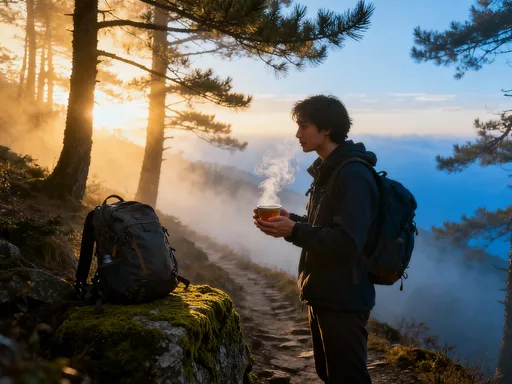
To practice quiet travel, intentionality is essential. Start each day with a simple ritual: light a candle, sip tea in silence, or write three words that reflect your desired mindset—curiosity, openness, gratitude. This brief pause signals to the nervous system that this journey is different. It is not about accumulation, but absorption. Planning fewer activities per day and allowing extra time between them enables deeper processing of each experience. A single morning spent observing artisans at work in a village square may yield more lasting value than five rushed museum visits. Slowness is not laziness—it is respect for the moment.
Additionally, the physical environment plays a role in shaping mental space. Choosing accommodations away from city centers—such as farm stays, ecological lodges, or retreat centers—can minimize distractions and amplify connection. These spaces often encourage communal meals, shared stories, and natural rhythms, reinforcing the principles of quiet travel. The goal is not isolation, but alignment: matching one's pace with the heartbeat of the place. In doing so, the journey becomes less about seeing and more about sensing—a subtle but profound difference.
Choosing Places That Listen
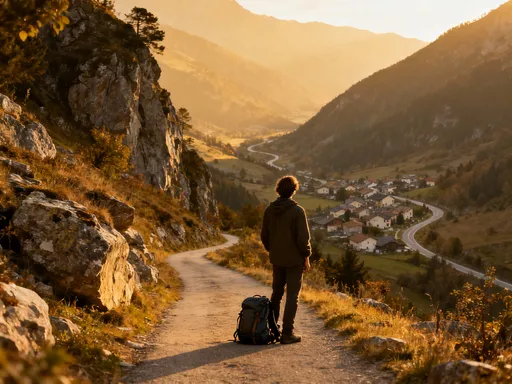
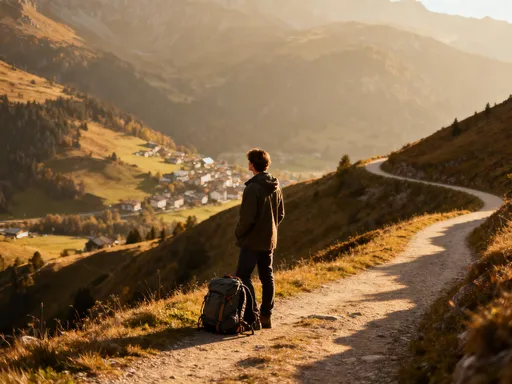
Not all destinations respond in the same way to the presence of visitors. Some cities and regions, overwhelmed by tourist traffic, have become strained versions of themselves—performing culture rather than living it. In contrast, quieter destinations often possess a unique capacity to 'listen'—to welcome travelers not as consumers, but as guests. These are places where interactions feel reciprocal, where local life continues unperturbed, and where the landscape retains its integrity. From the terraced villages of the Alpujarras in southern Spain to the forested trails of Japan’s Kii Peninsula, such locations offer the rare gift of authenticity.
Data supports this distinction. According to the World Tourism Organization, destinations with a visitor-to-resident ratio below 1:5 tend to maintain stronger cultural continuity and environmental health. In Venice, for example, the ratio exceeds 10:1 during peak season, contributing to resident displacement and ecological stress. Conversely, in the Alpujarras, the ratio hovers around 1:3, allowing tourism to coexist with daily village life. This balance is not accidental—it is often the result of community-led tourism initiatives, seasonal visitor caps, and infrastructure designed for sustainability rather than volume.
When selecting a destination, emotional intelligence must guide the decision. Ask not only 'What do I want to see?' but also 'What does this place give, and what does it need?' A simple online search can reveal whether a region has formal overtourism mitigation strategies, such as timed entry systems or night visitor bans. Platforms like Responsible Travel and Local Alike highlight regions actively seeking low-impact visitors. These are not hidden gems to be exploited, but stewarded with care. Travelers who arrive with humility and curiosity often find doors opening in unexpected ways—a shared meal invitation, a guided walk by a local elder, a workshop in traditional weaving.
Seasonality also plays a crucial role. Visiting during shoulder or off-peak months—such as late autumn in Kyoto or early spring in the Scottish Highlands—dramatically reduces crowds while enhancing the emotional texture of the journey. Cooler temperatures, softer light, and working landscapes create conditions conducive to reflection. Moreover, local businesses appreciate off-season patronage, which helps stabilize year-round income. Choosing such times is not a compromise—it is an elevation of the experience, allowing space for serendipity and deeper connection.
Designing for Presence, Not Proof
In an age of social media, the instinct to document every moment has become nearly automatic. Yet, this constant mediation—through lenses, filters, and captions—can erode the very presence travelers seek. Behavioral studies have shown that when people use cameras during experiences, their memory of the event is often limited to the act of photographing it, rather than the sensory and emotional layers of the moment itself. A 2019 experiment at the University of California found that participants who refrained from taking photos during a guided tour reported 40% greater emotional engagement and recall.
To reclaim presence, travelers can adopt a principle of modular experience design. This involves structuring the day into three intentional blocks: exploration, reflection, and local engagement. For example, a morning might include a guided walk through a historic neighborhood (exploration), followed by an hour of journaling in a quiet courtyard (reflection), and an afternoon tea with a local resident (engagement). This rhythm mirrors the natural ebb and flow of attention, preventing burnout and deepening meaning.
Practical tools support this shift. Analog journals—simple notebooks with no digital interface—invite unfiltered expression. Prompts such as 'What surprised me today?' or 'What did I hear that I’ve never heard before?' draw attention to overlooked details. Sensory check-ins—pausing to note three sounds, two scents, and one physical sensation—anchor the mind in the present. These small acts are not indulgences; they are forms of restoration.
Equally important are device-free hours. Committing to no screens from breakfast until early afternoon, or after sunset, allows space for observation and organic conversation. Instead of scrolling, travelers might sketch a scene, learn a few words in the local language, or simply sit and watch the rhythm of street life. Rituals also reinforce presence: a morning tea ritual with a view, an evening walk to review the day’s impressions, or a weekly letter written to a loved one summarizing insights. These habits transform travel from performance to practice.
The Rhythm of Movement
Travel, like music, has a natural rhythm. The most satisfying journeys are not those filled with constant intensity, but those that balance movement with stillness, activity with rest. This concept, borrowed from athletic training and biophilic design, is known as interval exploration. Just as athletes alternate between exertion and recovery to build endurance, travelers benefit from alternating days of activity with days of ease. A hike through forested hills can be followed by a day of reading in a sunlit garden; a visit to a bustling market by an afternoon siesta in a quiet room.
Consider the metaphor of breath: travel should inhale energy and exhale reflection. A sample itinerary might include a morning train ride to a lakeside village (active), a lunch of locally caught fish (sensory), an hour of sketching by the water (creative), and an early dinner followed by stargazing (restorative). This structure honors biological needs—circadian rhythms, digestion, cognitive processing—without sacrificing richness of experience.
The benefits are both physical and emotional. Travelers who incorporate recovery moments report lower fatigue, improved digestion, and greater clarity. They are also more likely to notice small wonders: a bird’s call at dawn, a child’s laughter in a courtyard, the way light shifts across stone walls. These details form the emotional architecture of memory. Moreover, syncing travel tempo with local rhythms—the opening of bakeries, the closing of shops, the pace of conversation—fosters respect and connection. In Mediterranean cultures, for example, the midday pause is not laziness but wisdom—a recognition that rest is essential to vitality.
Practical strategies include booking accommodations with common spaces conducive to lingering, choosing trains over planes when possible (for their slower, more scenic pace), and planning meals as events rather than fuel stops. A long lunch at a family-run taverna, where dishes arrive slowly and conversation flows easily, becomes a form of cultural immersion. This rhythm is not about doing less—it is about doing differently, with greater awareness and integration.
Local Threads, Global Meaning
The most enduring travel memories often stem not from monuments, but from moments of human connection. A shared meal with a local family, a hands-on craft workshop, a walk through a village with a resident guide—these micro-connections stitch travelers into the social fabric of a place. Research from the Global Sustainable Tourism Council indicates that travelers who engage in interpersonal experiences report 50% higher satisfaction than those who focus solely on sightseeing. These encounters are not curated performances; they are authentic exchanges that benefit both visitor and host.
Community-based tourism projects—such as homestays in rural Morocco or guided nature walks led by indigenous elders in New Zealand—ensure that economic benefits remain local. In many cases, these initiatives support education, healthcare, and cultural preservation. For example, a homestay program in northern Thailand funds school supplies for village children, while also offering guests an intimate view of daily life. These models shift tourism from extraction to reciprocity.
For travelers, the key is approaching these opportunities with curiosity rather than expectation. Instead of asking 'What can I get from this experience?', consider 'What can I learn, and how can I contribute?' Simple gestures—learning a greeting in the local language, offering to help set the table, listening more than speaking—build trust and openness. Platforms like Withlocals, FairTrip, and local cooperatives make it easier to connect with authentic guides and hosts. These are not transactions, but invitations to mutual understanding.
Over time, such experiences accumulate into a deeper worldview. They challenge assumptions, soften judgments, and expand empathy. A traveler who has shared tea with a shepherd in the Atlas Mountains may return home with a renewed appreciation for simplicity. These threads—small, quiet, unphotographed—become part of an internal tapestry that shapes how one sees the world long after the journey ends.
Sustainable Footprints, Invisible Gains
Sustainability in travel is often framed as sacrifice—giving up comforts, convenience, or choices. Yet, when approached mindfully, low-impact travel enhances rather than diminishes the experience. Simple choices—taking a train instead of a short-haul flight, eating at family-run restaurants using regional ingredients, carrying a reusable water bottle and utensils—align the traveler’s values with their actions. These are not grand gestures, but consistent threads that weave integrity into the journey.
Data illustrates the impact: a train journey from Paris to Lyon emits 90% less carbon per passenger than the equivalent flight. A meal made from locally sourced food reduces food miles and supports regional farmers. Choosing eco-certified accommodations—such as those with solar power, composting toilets, or rainwater harvesting—ensures that one’s stay contributes to environmental stewardship. These choices are not about perfection, but progress.
Perhaps the most powerful shift is in perception. Instead of viewing sustainability as limitation, see it as connection. When a traveler learns that their nightly fee helps fund a child’s education in a nearby village, the stay gains deeper meaning. When a reusable kit—complete with a bamboo toothbrush, cloth bag, and stainless steel straw—becomes part of the routine, it serves as a daily reminder of intention. Regenerative travel goes a step further: it seeks not just to 'do no harm,' but to leave a place better than it was found. This might mean volunteering for a trail cleanup, purchasing crafts directly from artisans, or dining at cafes that source from organic farms.
The gains are often invisible: cleaner air, preserved traditions, thriving communities. Yet, they are real. And for the traveler, they foster a quiet pride—not in what was seen, but in how one moved through the world.
Coming Home Transformed
The end of a journey is not its conclusion, but its beginning. Returning home after a quiet, intentional trip often brings a subtle ache—not of sadness, but of readjustment. The world may feel louder, faster, less patient. This post-travel letdown is common, but it can be transformed into integration. The key is to carry the journey forward, not as a memory, but as a practice.
One powerful tool is the travel echo journal. Unlike a traditional diary, this is a reflective space used weekly after returning. Entries might include: 'What insight from my trip still resonates?' 'What habit—morning tea, evening walk, sensory check-in—can I maintain?' 'How did I feel most alive, and how can I recreate that feeling here?' This journal becomes a bridge between places, helping to internalize lessons and sustain transformation.
Practical integration matters. Cooking a regional dish once a month—perhaps a Moroccan tagine or a Japanese miso soup—reconnects the senses to the experience. Joining a cultural meet-up, language exchange, or local walking group keeps curiosity alive. Planning micro-escapes—day trips to nearby forests, lakes, or historic towns—maintains the rhythm of discovery without requiring long flights. These acts are not substitutes for travel; they are extensions of it.
Ultimately, quiet travel is not about escaping the world, but about re-engaging with it—wiser, softer, awake. It invites travelers to listen more, consume less, and move with intention. The world whispers not in grand declarations, but in subtle moments: a shared silence, a handmade gift, a path walked slowly. To honor these whispers is to travel not just with the body, but with the heart. And in doing so, one does not merely see the world—one belongs to it.