Wander Deeper: The Art of Choosing Where It Matters Most
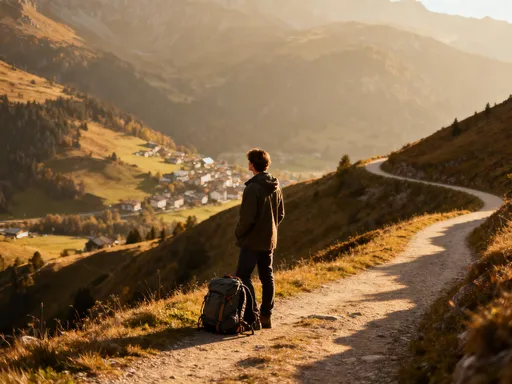
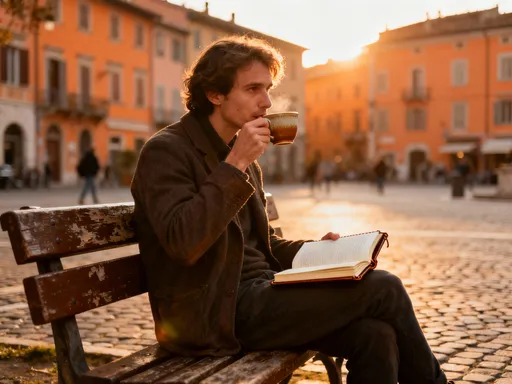
Every journey begins with a question not of distance, but of meaning. In a world overflowing with destinations, the true challenge isn’t where to go—but how to arrive with intention. Travel has shifted from mere escape to a quest for connection, clarity, and transformation. Yet without thoughtful selection and mindful preparation, even the most breathtaking places can feel hollow. This guide reimagines travel as a practice of presence, where destination choice, experience design, and practical wisdom align to deepen every moment. It’s not about ticking off landmarks, but about letting landscapes shape us.
The Quiet Revolution in Travel – Redefining Why We Roam
In recent decades, the rhythm of travel has changed. Where once the goal was to see as much as possible in the shortest time, modern travelers increasingly seek depth over distance. The rise of slow travel, immersive stays, and community-based tourism reflects a deeper hunger—not for photo albums filled with famous sites, but for experiences that leave an emotional imprint. According to a 2023 report by the Global Sustainable Tourism Council, over 68% of travelers now prioritize meaningful connection with local cultures over convenience or luxury. This shift marks a quiet revolution: one that values presence more than pace, and transformation more than trophies.
The psychological rewards of intentional travel are well documented. Studies from the Journal of Positive Psychology show that travelers who engage mindfully with their surroundings report lower levels of burnout and higher emotional resilience upon return. These benefits are not accidental. They stem from the deliberate act of stepping away from routine and opening oneself to new rhythms, perspectives, and forms of beauty. When a woman from Colorado spends a week walking ancient pilgrimage paths in northern Spain, she is not just hiking; she is reclaiming a sense of solitude and inner clarity. When a mother from Toronto chooses a quiet coastal village in Portugal for her family’s summer break, she is not just changing scenery—she is creating space for slower conversations and deeper bonds.
This evolution also reflects a growing awareness of travel’s impact. Mass tourism, while economically significant, often leaves fragile ecosystems strained and local communities sidelined. The desire for authenticity is not merely personal—it is ethical. Travelers today are asking not only what a destination can offer them, but what they can offer in return. The result is a new kind of journey: one that honors both the traveler’s inner world and the outer world they enter. The places we choose do not just reflect our tastes—they shape our values. As the saying goes, where we go shapes who we become.
Mapping Desire: How to Listen to Your Next Destination
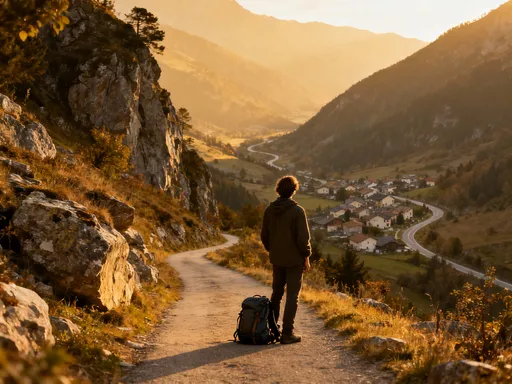
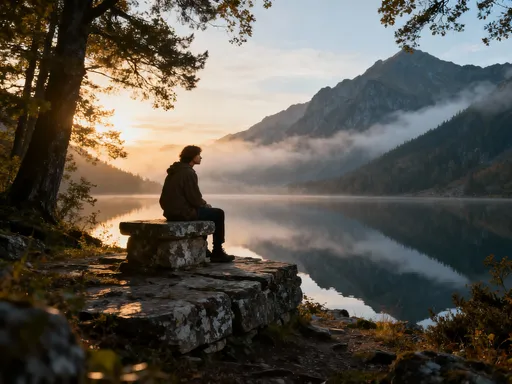
Choosing a destination should not begin with a map, but with a moment of stillness. Before browsing flights or scanning reviews, the most powerful question is not “Where should I go?” but “What do I need right now?” A vacation planned in response to emotional need—a longing for peace, a need for inspiration, or a desire to reconnect with oneself—carries a different weight than one chosen for convenience or trend. This is the heart of inner compass alignment: matching travel decisions to personal rhythms and life phases.
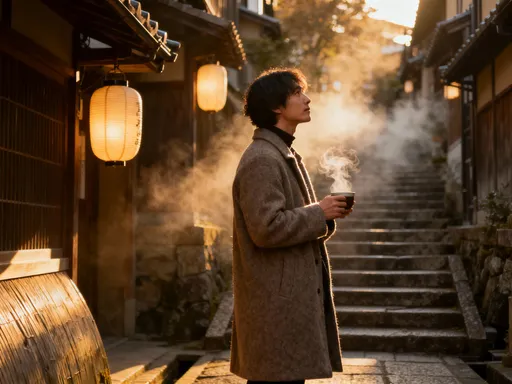
Consider the woman in her early 40s, navigating a career transition. She may feel drawn to a retreat in the Japanese mountains, not because it’s exotic, but because its emphasis on silence and ritual mirrors her internal search for clarity. Or the mother of two teenagers, sensing the family’s growing busyness, who books a farmhouse in Tuscany where meals are long, walks are unhurried, and conversation flows naturally. These choices are not random. They are intuitive responses to unspoken needs. A simple self-assessment can help clarify this: What kind of experience am I seeking? Renewal? Challenge? Connection? Wonder? Each answer points toward a different kind of place and pace.
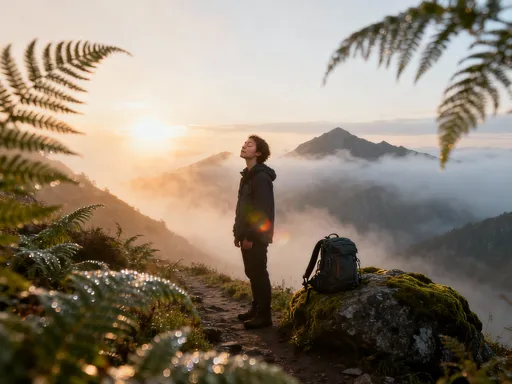
Renewal often calls for quiet, natural settings—forests, lakes, or remote coastlines—where the mind can reset. Challenge may lead to physically demanding treks or cultural immersion in unfamiliar environments, such as learning pottery in a rural Thai village. Connection thrives in places where community life is visible and accessible—family-run guesthouses, neighborhood markets, or festivals open to visitors. The key is to let feeling guide geography. When travel aligns with emotional truth, it becomes not just a break from life, but a part of it. The destination is no longer an escape, but a mirror.
Beyond the Brochure: Seeing Places as Living Stories
To travel with intention is to move beyond the surface. It means seeing a city not as a checklist of monuments, but as a living narrative shaped by centuries of dreams, struggles, and daily rituals. A morning market in Marrakech is not merely a photo opportunity—it is a symphony of scent, sound, and movement, where generations of families gather to trade olives, herbs, and handmade bread. A quiet path through a山村 village in Taiwan is not just a scenic trail, but a corridor of memory, where elders still tend tea fields planted by their grandparents.
These moments of depth are not found in guidebooks. They emerge when travelers slow down and ask better questions: What does this place protect? What does it dream? What rhythms govern its days? In Kyoto, the answer might be found in the precise choreography of a tea ceremony, a practice preserved for centuries as an act of mindfulness. In a small fishing town on the west coast of Ireland, it may be the nightly ritual of pulling nets by hand, a tradition that binds the community to the sea’s rhythms. These are not performances for tourists—they are ways of being.
Destinations that reward lingering often fly under the radar of mass tourism. They include alpine hamlets in northern Italy, where dialects older than the nation are still spoken, or coastal towns in Maine that close half their shops in winter, embracing the quiet. These places do not cater to crowds. Instead, they invite presence. They ask the traveler to pause, observe, and listen. When we approach travel this way, we stop consuming experiences and begin participating in them. We become not just visitors, but witnesses to lives unfolding. And in that witnessing, we often find unexpected reflections of our own.
The Hidden Architecture of Great Trips: Planning with Flexibility
A well-designed trip is not one that fills every hour, but one that allows space for the unexpected. The hidden architecture of meaningful travel lies in its balance of structure and openness. Too much planning turns a journey into a task list; too little can lead to frustration or missed opportunities. The solution is what some call the “80/20 rhythm”: 80% light structure, 20% open space for discovery. This approach honors both preparation and spontaneity, ensuring that the journey remains fluid and responsive to the moment.
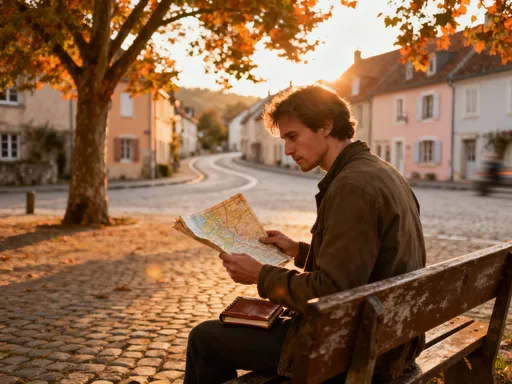
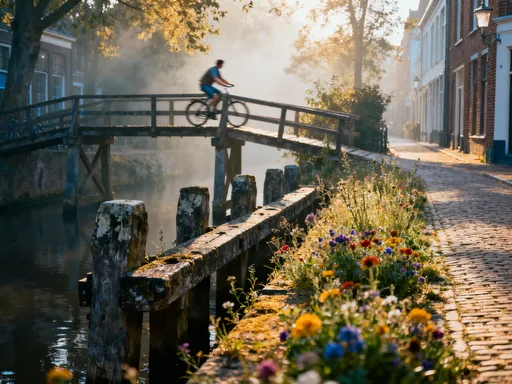
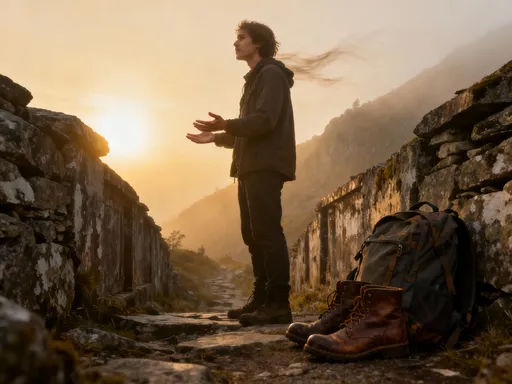
Timing and pacing are critical. Arriving in a new city on a Sunday evening, when streets are quiet and energy is low, sets a different tone than rushing in on a Monday morning amid traffic and noise. Choosing to spend three nights in one village rather than rushing through five towns allows time to form connections—to recognize the baker’s smile, to learn the dog’s name, to understand the rhythm of the tides. Transportation choices also shape experience. Opting for a regional train instead of a direct flight, or a bicycle over a rental car, can transform how a landscape is perceived. Movement becomes part of the journey, not just a means to an end.
Logistical grace—anticipating needs without over-scheduling—is another hallmark of thoughtful travel. Booking one key experience in advance, such as a guided nature walk or a cooking class with a local family, provides anchor points without locking in every detail. The rest remains open. This kind of planning respects the traveler’s energy and mood. It allows for the afternoon nap that leads to a sunset stroll, or the chance encounter at a café that turns into a lasting friendship. Great trips are not measured by how much was done, but by how deeply it was felt. And that depth requires room to breathe.
Local Eyes, Global Hearts: Connecting Without Consuming
One of the most powerful shifts in modern travel is the move from observation to exchange. Instead of viewing local cultures as spectacles, mindful travelers seek ways to engage with humility and reciprocity. This begins with economic choices. Staying in family-run inns, eating at neighborhood restaurants, and purchasing crafts directly from artisans ensure that tourism dollars support the people who call a place home. According to a 2022 study by the International Ecotourism Society, when travelers prioritize locally owned businesses, up to 65% more of their spending stays within the community, compared to just 20% in resort-dominated areas.
Respectful engagement goes beyond economics. It includes learning a few phrases in the local language—not just “hello” and “thank you,” but expressions that show care and curiosity. It means observing social norms, such as dress codes at sacred sites or the unspoken rules of shared spaces. It involves listening more than photographing, asking permission before taking portraits, and understanding that some moments are not meant to be captured, but lived.
Meaningful connection often arises in simple acts: sharing a meal with a host family in Oaxaca, helping a farmer gather eggs in rural Greece, or joining neighbors in a village cleanup in Bali. These are not staged experiences—they are real moments of human connection. They remind us that travel is not about collecting differences, but recognizing shared values: kindness, hospitality, resilience. When we approach communities not as tourists, but as guests, we open the door to mutual understanding. We carry not just memories, but gratitude.
Tools for Presence: Practices That Deepen the Journey
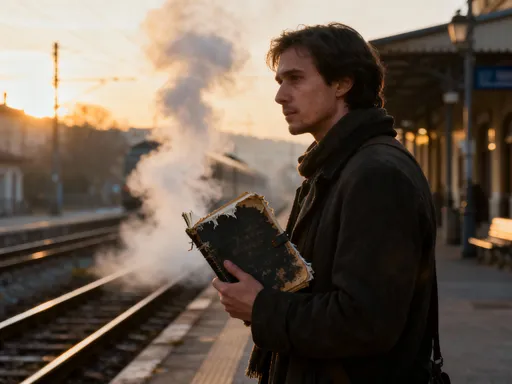
Mindfulness is not reserved for meditation cushions—it can be woven into the fabric of travel. Simple practices help anchor attention and deepen experience. One of the most effective is travel journaling. Not the kind that logs daily activities, but one that captures feelings, observations, and questions. Prompts like “What surprised me today?” or “Where did I feel most alive?” invite reflection and help preserve the emotional texture of a trip. Studies from the University of California have shown that writing about experiences enhances memory retention and emotional integration, making the journey last longer in the mind.
Sensory check-ins are another powerful tool. Taking a moment each day to pause and notice—what you hear, smell, feel, taste—grounds you in the present. It might be the scent of pine after rain in the Swiss Alps, the warmth of sun-baked stone under your hand in Seville, or the sound of children laughing in a village square in Morocco. These details are the building blocks of lasting memory. Digital boundaries also play a role. Setting limits on screen time—such as no phones during meals or a daily “unplugged hour”—creates space for deeper observation and connection.
Small rituals can become touchstones. A morning walk without an agenda, a daily sketch in a notebook, or a five-minute sit in silence at a local park—these acts create continuity amid change. They also make room for boredom, which is often where insight begins. When the mind is not constantly stimulated, it begins to wander in creative ways, making unexpected connections. Presence is not about doing more, but about noticing more. And what we notice shapes what we carry home.
Coming Home Changed: Carrying the Journey Forward
The end of a trip is not a return to normal, but a beginning. The most profound journeys do not end at the airport—they continue in the way we see our lives, our homes, and ourselves. Many travelers report subtle shifts upon return: a calmer pace, a renewed appreciation for simple routines, or a bolder willingness to make changes. A woman who spent ten days in a silent retreat in the French countryside may find she speaks more intentionally. A mother who wandered the temples of Kyoto may bring a new sense of patience to her family life.
Integrating these lessons requires intention. Post-trip rituals can help. Sharing one story deeply—with a friend, a journal, or a small gathering—allows the experience to settle. Creating a memory map, where key moments are plotted with words and images, turns the journey into a living archive. Revisiting a local park or café with “traveler’s eyes”—noticing textures, sounds, and rhythms as if for the first time—can reawaken the sense of wonder cultivated abroad.
The best journeys do not erase the past, but expand it. They remind us that growth is possible at any age, that curiosity is a lifelong companion, and that even small changes in perspective can transform daily life. Travel, at its core, is not an escape from home—but a way to return to it with fresh eyes. And in that return, we carry not just souvenirs, but a deeper understanding of who we are, and who we might become.