Wander With Purpose: The Art of Meaningful Travel
Travel is more than movement—it’s transformation. Every journey shapes the traveler, quietly altering perspectives and revealing hidden layers of the world and self. In an age of crowded itineraries and checklist tourism, true discovery lies not in how far we go, but in how deeply we engage. From mountain trails to village markets, authentic experiences emerge when intention guides exploration. This is the heart of purposeful travel: choosing depth over distance, connection over convenience. With mindful choices, every trip becomes a quiet act of learning, a dialogue between culture and curiosity.
The Mindset Shift: From Tourist to Explorer
Intentional travel begins not at the airport, but within the mind. The difference between a tourist and an explorer is rarely the destination; it’s the approach. A tourist checks off landmarks, often viewing experiences through the lens of efficiency. An explorer, however, moves with curiosity, embracing uncertainty and valuing connection over convenience. This shift in mindset is subtle but profound, altering not only what one sees but how one remembers and internalizes the journey. Consider two travelers visiting rural Portugal. One rushes from a UNESCO site to a photo spot, then back to the rental car. The other spends a morning in a village square, sipping coffee with a local baker, listening to stories in broken but heartfelt conversation. Years later, which memory lingers? The answer reveals the emotional weight of presence.
Psychological research supports this insight, showing that experiences are remembered not by quantity but by emotional depth. When travelers engage mindfully, their brains form stronger neural pathways linked to personal identity and long-term recall. This isn’t about luxury or duration; it’s about attention. Studies from the Journal of Consumer Psychology suggest that travelers who practice presence—focusing on sensory input, minimizing distractions, and engaging in reflective moments—report higher levels of well-being and lasting satisfaction. The benefits extend beyond the trip itself, often leading to increased creativity, patience, and empathy in daily life.
Curiosity, respect, and openness are the cornerstones of this new mindset. Curiosity drives questions: Why do people gather at this fountain each evening? What does this festival symbolize? Respect ensures that these questions are asked gently, without entitlement. Openness allows space for discomfort, surprises, and unexpected kindness. Together, they form a quiet readiness to learn, not perform. These attitudes can be cultivated before departure. Journaling about travel intentions helps clarify purpose. Setting simple goals—such as having one meaningful conversation each day or learning five local phrases—builds confidence and focus. Researching local values, from tipping customs to dining etiquette, signals respect and minimizes friction. A traveler preparing for a homestay in Vietnam might learn that removing shoes before entering a home is a sign of care, not just courtesy. This small act, informed by understanding, instantly deepens connection.
Pre-trip preparation also includes managing expectations. Purposeful travel doesn’t promise flawless comfort. It embraces detours, delays, and unfamiliar routines as part of the experience. A missed bus in the Andes could become a shared laugh with fellow passengers, a spontaneous meal at a roadside stall, or a walk through highland mist that reveals quiet beauty. When travelers relinquish rigid plans, space opens for genuine interaction. The mindset shift, therefore, is not just philosophical; it is practical. It equips individuals to meet the world as it is, not as a brochure says it should be.
Choosing Destinations That Resonate
Not every destination offers the same potential for connection. In a world where overtourism strains cities like Venice and Bali, selecting places that align with personal values is both an ethical and emotional choice. Meaningful travel starts with intention: What kind of experience am I seeking? Is it calm, creativity, cultural immersion, or natural wonder? The answer guides destination selection far more effectively than rankings or influencer trends. A woman passionate about textiles might feel more fulfilled visiting Bhutan’s weaving villages than queuing at a crowded museum in Paris. A retiree seeking tranquility may find deeper peace in Slovenia’s Lake Bled than in the neon buzz of Tokyo.
Authenticity, sustainability, and cultural richness should anchor these decisions. Authenticity means places where life unfolds naturally, not primarily for tourists. Sustainability ensures that travel supports, rather than depletes, local communities. Cultural richness refers to destinations where traditions are alive and accessible, not staged. Regions like Albania’s Albanian Riviera or Japan’s Tottori Prefecture exemplify these qualities. These locations see only a fraction of the tourists drawn to their more famous neighbors, yet offer equal beauty and deeper access. According to data from the World Tourism Organization, community-based tourism in such regions has grown by 12% annually over the past five years, with travelers increasingly valuing real interaction over curated experiences.
To simplify destination planning, consider a practical framework: interest × impact × accessibility. Interest reflects personal passion: cooking, hiking, history, or nature. Impact measures how a visit supports local economies—does money stay in the community? Accessibility includes both physical logistics and emotional readiness. A destination may be meaningful but impractical for a first solo trip. By balancing these three factors, travelers avoid the trap of choosing places based solely on proximity or popularity. For instance, a family interested in slow living might select Puglia in southern Italy over Rome. While Rome dazzles with history, Puglia offers trulli homes, olive groves, and village festivals where children dance with elders. The slower pace allows deeper immersion, and local guesthouses often rely on family labor, ensuring economic benefit flows directly to residents.
Hidden gems often yield stronger emotional returns because they lack the performative atmosphere of crowded sites. In Georgia’s Kakheti region, wine is made in clay qvevri vessels buried underground, a tradition unchanged for 8,000 years. Visitors are welcomed not as customers, but as guests. There is no entrance fee, no gift shop—only shared meals and stories. These moments, unscripted and unhurried, become the soul of a journey. Choosing such destinations isn’t about rejecting famous cities altogether, but about seeking balance. A trip to France might include a day in Paris but center on a week in Limoges, where artisans still hand-paint porcelain and bakers greet neighbors by name. Resonant travel is less about geography than gravity—where does your heart feel most at home?
Designing Immersive Itineraries
An itinerary should not be a checklist, but a canvas for connection. Traditional schedules, packed with timed entries and photo stops, often lead to exhaustion, not enrichment. In contrast, immersive planning prioritizes rhythm, meaning, and human interaction. The key is structure with flexibility—enough outline to provide direction, but enough space for spontaneity. This approach honors the reality that some of the best moments in travel happen off the map: a shared laugh with a shopkeeper, an invitation to a local celebration, or a quiet view discovered while lost.
One effective method is building around anchor experiences—activities that engage the senses, require participation, and leave lasting memories. These are not passive observations but active engagements: kneading dough in a home kitchen in Morocco, learning to weave with a Mayan artisan in Guatemala, or planting rice seedlings in a rural Japanese village. Such experiences create stories, not just souvenirs. A study published in the Annals of Leisure Research found that travelers who participated in skill-based activities reported higher levels of personal growth and cultural understanding than those who only observed. Anchor experiences also serve as emotional landmarks, helping travelers organize their memories around transformation, not time.
Consider a sample day in New Zealand’s Coromandel Peninsula. The morning begins with a guided walk through native bush, led by a Māori guide who shares legends tied to the trees and streams. Afterward, travelers visit a coastal farm for a workshop on traditional flax weaving. Lunch is a shared hāngi meal, cooked underground with heated stones. The afternoon is free—no scheduled events—allowing time to swim, journal, or chat with locals at a seaside cafe. The evening includes a storytelling session under the stars. Notice the balance: two structured activities, ample downtime, and a strong sense of cultural continuity. This rhythm avoids fatigue while fostering depth.
Practical tools aid in crafting such itineraries. Digital maps with layered notes allow travelers to mark not just locations, but intentions: “Ask about family’s farming history” or “Try the purple yam stew.” Offline guides ensure access in remote areas, and collaborative apps let family members contribute to the plan. The goal is not control, but readiness: being equipped so that when opportunity knocks—a festival, a storm, a local invitation—one can adapt without stress. Transit time should also be minimized; long drives or multiple hotel changes fracture continuity. Staying in one region for several days allows deeper roots to form. Travelers who return to the same café each morning often find themselves greeted by name, offered samples of new dishes, and pulled into conversations about harvests or festivals. These small moments, repeated, build trust and belonging.
Navigating Language and Culture with Grace
One of the most common travel fears is the language barrier. Yet, communication is less about fluency and more about effort. A simple greeting in the local dialect—“Kumusta” in the Philippines, “Jambo” in Tanzania—can instantly shift a stranger’s expression from neutrality to warmth. These small gestures signal respect and openness, forming bridges where words fail. In rural Guatemala, a traveler who struggled with Spanish was invited to a family meal after attempting to ask about their pottery. No phrase was perfect, but the attempt mattered. The evening included hand gestures, shared bread, and laughter over mispronunciations. Years later, the memory wasn’t about grammar—it was about connection.
Modern tools support communication without replacing human interaction. Translation apps like Google Translate or Pocketalk are useful, especially when used discreetly—not waved like a screen, but offered gently when needed. Phrasebooks remain valuable, particularly for learning pronunciation and cultural context. But the real skill lies in nonverbal communication: eye contact, tone, and body language. A smile, patient silence, or a nod can convey more than sentences. In northern Thailand, a monk once shared tea with a silent traveler, communicating through ritual and presence. Words were unnecessary; the moment was complete.
Cultural “lenses” help travelers interpret differences without judgment. In many societies, time is fluid rather than rigid. A delayed event in Morocco isn’t rudeness—it’s a reflection of communal priorities. Personal space varies widely; in Japan, quiet restraint is polite, while in Ecuador, closeness signals warmth. By observing first, then participating, travelers avoid missteps and show humility. Watching how locals greet, eat, or say goodbye offers vital clues. Children are especially helpful guides—their behavior reflects unfiltered cultural norms. A parent traveling with children might notice how local kids interact, then gently model similar behavior.
The goal isn’t perfection, but presence. Admitting ignorance with a smile—“I’m learning”—often invites help. In Vietnam, a traveler who bowed too deeply was corrected with a chuckle and a demonstration. The correction wasn’t criticism—it was inclusion. These moments of mutual teaching are the essence of cultural exchange. They remind us that travel isn’t about becoming local, but about becoming humble, curious, and connected.
Sustainable Engagement and Ethical Choices
Meaningful travel extends beyond personal growth—it includes responsibility. Every choice, from lodging to lunch, has ripple effects. Staying in a family-run guesthouse instead of an international chain keeps 68% more income within the local economy, according to the International Ecotourism Society. Eating at a village market supports farmers and reduces food miles. Avoiding elephant rides or orphanage tourism prevents harm to animals and vulnerable populations. Ethical decisions enhance both the experience and its legacy.
Community-based tourism is a growing force for good. In Bhutan, a country that measures Gross National Happiness, visitors pay a daily sustainable development fee that funds education, healthcare, and conservation. In Kenya, conservancies managed by Maasai communities protect wildlife while generating income through eco-lodges. These models prove that tourism can be a tool for empowerment, not exploitation. Travelers who support such initiatives become part of a positive cycle—their presence helps preserve culture and nature.
A simple checklist can guide ethical decisions: Is this business locally owned? Does it respect the environment? Does it honor cultural traditions? Can I leave this place better than I found it? These questions encourage reflection before spending. Visiting a craft cooperative, for example, not only purchases a unique item but supports a family. The interaction often includes a demonstration, turning shopping into learning. In contrast, buying mass-produced souvenirs from a duty-free shop extracts value without return.
Sustainability also involves behavior. Staying on marked trails protects fragile ecosystems. Using reusable bottles reduces plastic waste. Learning local customs prevents unintentional disrespect. A woman traveling in Laos learned that touching someone’s head is taboo; a man in Turkey realized that public affection, even between spouses, can be frowned upon. These lessons, though small, reflect a larger ethic: to move through the world with care. When travelers act as guests, not guests of honor, they receive the greatest gift—true welcome.
Capturing Meaning Beyond the Camera
In an age of social media, photos dominate memory-making. Yet, research shows that over-documenting can diminish presence. A study in Psychological Science found that participants who took photos of a museum exhibit remembered fewer details than those who simply observed. The camera, while useful, can become a barrier when it replaces attention. Purposeful travelers seek balance: capturing moments without capturing them entirely. The goal is not to record every sunset, but to feel it.
Alternative methods deepen reflection. Journaling, even briefly, transforms experience into insight. A few sentences each evening—“Today, an old woman showed me how to roll dough. Her hands moved like water”—preserve emotion, not just facts. Sketching, regardless of skill, engages the mind differently than photography. Collecting small mementos—a ticket stub, a pressed flower, a scrap of fabric—creates tactile memories. One traveler returned from Morocco with a vial of desert sand; years later, holding it still brought back the wind, the silence, the vast sky.
Prompts can guide daily reflection: What surprised me today? Who changed my perspective? What did I learn about patience, joy, or silence? These questions encourage introspection, turning events into lessons. Digital minimalism helps too—limiting screen time, turning off notifications, setting “no phone” hours. One woman traveling in Iceland spent mornings without her device, walking trails with a notebook. She returned not with hundreds of photos, but with a clear memory of ice cracking under moonlight and a poem she wrote by a frozen lake.
Memory is shaped by attention, not documentation. The brain remembers what it focuses on. When travelers prioritize presence over posting, their experiences take root more deeply. Years later, they won’t just recall what something looked like—they’ll remember how it felt, what it meant, and how it changed them.
Bringing It Home: Integrating the Journey
The journey doesn’t end at the airport. True transformation happens when travelers bring insights back into daily life. Re-entry can be disorienting; the rhythm of home often feels jarring after the stillness of a mountain retreat or the warmth of a coastal village. But with reflection, the trip becomes more than a memory—it becomes a mirror.
Rituals help integrate experience. Creating a memory board with photos, mementos, and journal excerpts keeps the journey alive. Hosting a meal inspired by the trip—perhaps a Thai curry night or a Spanish tapas spread—shares the culture with loved ones. Teaching a skill learned abroad, such as pottery or basic phrases, extends its impact. One woman returned from Peru and began hosting weekly weaving circles, teaching neighbors the techniques she learned. The activity fostered community and kept her memories vibrant.
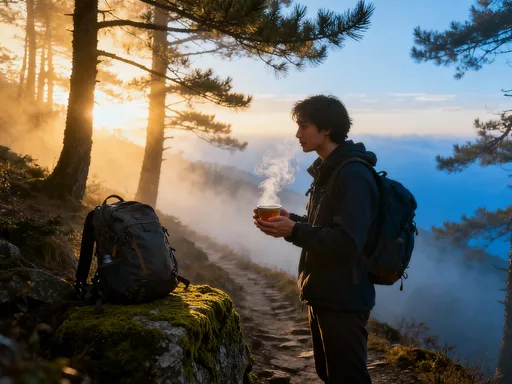
Deeper changes are often subtle. Travelers may adopt a slower pace, cook with new ingredients, or pause before reacting in stress. They listen more, complain less, and notice small beauties: steam rising from a cup, birdsong at dawn. These shifts reflect internalized lessons—from markets where people waited patiently, or villages where life unfolded without rush. A man who trekked in Nepal began meditating daily, recalling the monks’ calm. A teacher who volunteered in Ghana redesigned her classroom to include global stories, inspired by children she had met.
In the end, purposeful travel is not escape. It is return—to oneself, to connection, to intention. It reminds us that wonder exists not only in distant lands but in the way we see the world. Every journey, when approached with care, becomes a thread in the fabric of a more thoughtful, compassionate life. And that is the deepest transformation of all.