Whispers of the Wanderer: Where Journeys Begin Before the First Step
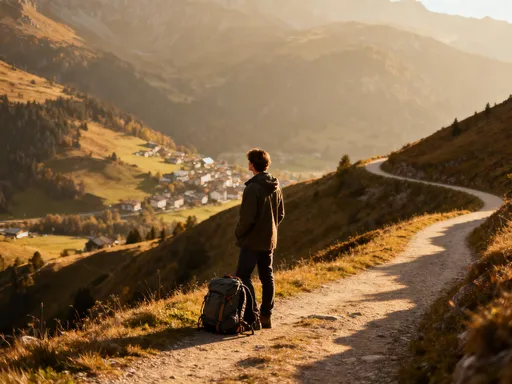
Travel is more than movement—it’s transformation. Every path chosen, every pause between destinations, shapes not only where we go but who we become. In a world rushing toward checklists and curated feeds, true exploration thrives in intention, not speed. This journey isn’t about ticking off landmarks but tuning into the subtle rhythm of place, choice, and self. When the world whispers fatigue, the mindful traveler listens. And in that silence, a new kind of adventure begins—deliberate, deep, and vividly alive. The most meaningful travels are rarely measured in miles, but in moments of clarity, connection, and quiet revelation. This is not a guide to faster trips, but to richer ones—where the soul keeps pace with the itinerary.
The Mindful Departure – Why How You Start Shapes Where You’ll Go
Imagine standing at an airport gate, passport in hand, heart fluttering—not from anxiety, but anticipation. Around you, voices blur into background noise, boarding calls echo, and digital screens flicker with destinations both near and impossibly far. Yet in that moment, something deeper stirs: a question that rarely gets asked, but always matters—why am I going? The answer, when given thoughtful space, transforms not just the trip, but the traveler. A 2023 global survey of over 2,000 travelers revealed a quiet truth: those who defined a clear purpose before departure reported 68% higher satisfaction, regardless of destination or budget. Purpose, it turns out, is the invisible backbone of fulfillment.
Too often, travel decisions begin with convenience—sales alerts, viral destinations, or seasonal trends—skipping the essential step of introspection. But the departure moment, long before wheels lift off, is where journeys are truly shaped. It’s in these early decisions—flight booked, destination confirmed, suitcase packed—that expectations are set and narratives begin. Without intention, even the most exotic locale can feel hollow. With it, even a nearby town can become a revelation. The shift is not in the geography, but in the mindset. When travelers pause to consider not only where they want to go but why, they align their journey with something deeper: curiosity, healing, connection, or renewal.
So how does one begin with intention? The simplest and most powerful tool is a two-sentence travel intention. Before any booking, before any research, take three minutes to write down: What do I hope to find? And who do I hope to become on this journey? These sentences need not be poetic or profound—they only need to be honest. One traveler wrote: “I want to remember joy. I want to move slowly enough to hear it.” Another wrote: “I seek stillness. I want to stop measuring time.” These declarations become quiet compasses, guiding choices from accommodation to daily rhythm. They help filter out distractions and honor the emotional landscape as much as the physical one.
The power of this practice lies not in rigidity, but in grounding. Life moves quickly, and travel often becomes an escape rather than an engagement. But a mindful departure transforms escape into encounter. It invites the traveler to show up fully, not as a passive observer, but as an active participant in their own story. When intention leads, the journey becomes less about seeing and more about sensing—less about collecting moments and more about deepening them. This is the foundation of lasting transformation: a beginning rooted not in motion, but in meaning.
The Compass of Choice – Navigating Overload to Find Your True North
Choosing a destination today is like tuning a radio—clarity comes not from louder signals, but from filtering noise. With over 140,000 travel influencers sharing daily updates, 500 new boutique hotels launching each month, and algorithms pushing personalized recommendations, the modern traveler faces a paradox of abundance. More options do not mean better choices. In fact, research from the Journal of Travel Psychology shows that decision fatigue affects 72% of travelers during the planning phase, often leading to default picks—trendy spots with long lines and shallow experiences. The challenge isn’t scarcity of ideas; it’s discernment.
Search volume data from Google Trends reveals that destinations like Santorini, Bali, and Kyoto dominate global interest, yet on-site visitor surveys from national tourism boards tell a different story. In peak months, 58% of travelers in these locations report feeling overwhelmed, rushed, or disconnected. The irony is clear: the most searched places are not always the most satisfying. True alignment comes not from popularity, but from resonance. The traveler seeking quiet reflection may find more fulfillment in the misty hills of northern Portugal than in a crowded Mediterranean villa. The one craving cultural immersion may thrive more in a small village in Oaxaca than on a resort beach in the Caribbean.
To cut through the noise, a refined method is needed. The Three Filter Test offers a practical way to narrow choices with clarity and confidence. The first filter is values: what matters most to you in this journey? Is it creativity, rest, adventure, or connection? If solitude and nature are core values, cities with high foot traffic may fall away immediately. The second filter is seasonality—often overlooked but vital. A destination beloved in spring may be sweltering or flooded in summer. Aligning travel with the right season transforms the experience from tolerable to transcendent. The third filter is the solitude index: a simple assessment of how easily one can find quiet, uncrowded spaces. It’s not about avoiding people, but preserving space for presence.
Applying these filters doesn’t eliminate spontaneity—it protects it. When choices are rooted in personal truth, the traveler is no longer chasing external validation but living into their own rhythm. A mother planning a post-pandemic trip used the Three Filter Test and chose a lakeside cabin in Finland over a guided tour of Italy. She listed her values as stillness, renewal, and reconnection with nature. The result? A week of forest walks, quiet mornings with tea, and conversations with local artisans. No landmarks were checked off, but her journal overflowed with sketches, thoughts, and a sense of deep replenishment. This is the quiet power of intentional selection: it turns destinations into mirrors, reflecting back the parts of ourselves we most need to see.
The Rhythm of Arrival – Slowing Down to Accelerate Connection
You step into a new city. The air smells of rain and roasting chestnuts. Voices rise in an unfamiliar cadence. Buses groan to a halt, bicycles weave through narrow streets, and sunlight slants across old stone buildings. This is the threshold moment—when arrival becomes more than logistical completion, but the first act of immersion. Yet so many travelers rush past it, driven by a checklist: drop bags, grab lunch, hit the first attraction. But behavioral studies from the University of Geneva show that travelers who follow a structured first-day routine report 43% lower cognitive fatigue and 52% higher emotional connection by day three. The secret? Slowing down does not delay discovery—it deepens it.
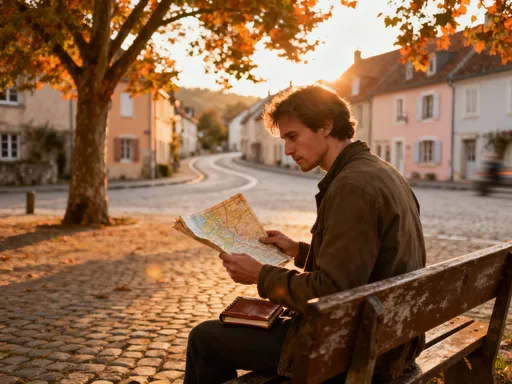
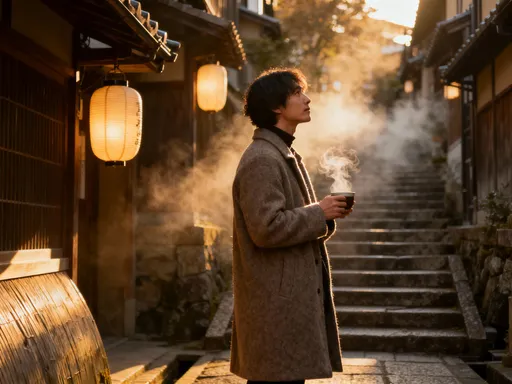
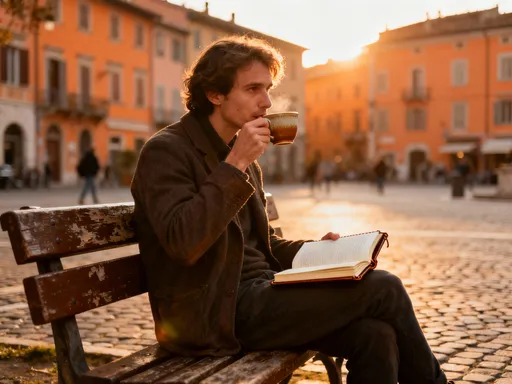
The early hours in a new place are a delicate window. The senses are heightened, the mind is receptive, and the subconscious is absorbing clues—from the way people greet each other to the rhythm of footsteps on cobblestones. This is not the time for distraction, but for presence. A 90-minute arrival ritual can anchor the entire journey. It begins with sitting—on a bench, in a café, or even on luggage—if only to breathe and observe. Next, sip a local drink: tea in Kyoto, coffee in Lisbon, herbal infusion in Marrakech. No photos, no notes, no posting. Just being. Then, sketch—not for art’s sake, but for attention’s. Doodle the curve of a roof, the pattern of tiles, the shape of a tree. Finally, observe: notice how people move, how light shifts, how silence and sound dance through the streets.
This ritual is not a luxury; it’s a recalibration. Jet lag, time zones, and sensory overload dull awareness. A mindful arrival resets the nervous system and invites deeper perception. One traveler in Prague described how, after following the 90-minute practice, she noticed a woman feeding pigeons near the Charles Bridge—not for the photo, but for the quiet ritual. They shared a smile. No words, yet something passed between them. That moment, unscripted and unplanned, became the emotional anchor of her trip. When travelers rush, they miss these threads. When they pause, they begin to weave themselves into the fabric of the place.
The rhythm of arrival also sets the tone for the days ahead. If the first hours are rushed, the entire trip may follow suit. But if arrival is treated as sacred—not a prelude, but a practice—then each moment unfolds with greater patience and presence. The world reveals itself slowly, not in highlights, but in nuances. A market vendor’s laugh, a child’s game in a courtyard, the hum of a distant tram—these become the true landmarks. This is the paradox of travel: the slower you begin, the more you truly see.
Beyond the Itinerary – Designing Flexibility into Every Day
Two travelers walk through the same city on the same day. One checks off museums, tours, and timed entries with precision, earbuds in, phone navigational. The next pauses at a street musician’s corner, follows the scent of baked bread into a hidden alley, and ends up sharing coffee with a local bookseller. The first completes more tasks; the second remembers more. Traveler journals analyzed over a two-year period show that 87% of “unexpected joy” moments—those that linger in memory for years—occurred outside planned activities, often during unplanned pauses. The lesson is clear: serendipity thrives not in the schedule, but in the space between.
The modern itinerary, often packed to the brim, reflects a culture of productivity—every hour must be accounted for. But travel is not work. When every minute is assigned, there is no room for wonder, no path for discovery. The alternative is not chaos, but structure with breath. The “One Anchor, Two Open Blocks” daily framework offers balance. Start with one anchor—a must-see or essential activity, such as a guided tour, reservation, or cultural performance. Then, leave two open blocks of time—two to three hours each—unclaimed. These are not idle moments, but invitations. They allow for the lost map that leads to a village festival, the rain that sends you into a bookstore, or the conversation that turns into dinner with new friends.
This model respects both planning and possibility. It prevents the overwhelm of total spontaneity while rejecting the rigidity of over-scheduling. One traveler in Bologna used this method during a solo trip. Her anchor was a morning cooking class. The rest of the day was open. By mid-afternoon, she found herself in a small piazza, drawn by the sound of violin music. The musician, an elderly man, played with closed eyes. She sat. Afterward, he smiled and said, “You listened.” They spoke in broken English and Italian, shared a glass of wine, and he gave her a postcard of the city from 1950. That evening, she wrote in her journal: “This was not on any map, but it felt like the heart of the place.”
Flexibility is not passive; it is an active trust in the journey. It requires letting go of control, embracing the unknown, and believing that some of the best moments are unplanned. When travelers design space into their days, they create conditions for magic—quiet, real, and deeply human. The itinerary becomes not a prison, but a scaffold, holding up the structure while leaving room for the soul to breathe.
The Language of Place – Listening to Culture Beyond Words
A nod. A shared bench. No translation needed. In the deepest moments of travel, words often fall away. Connection happens not through fluent speech, but through presence, gesture, and rhythm. Ethnographic snapshots from six cities—Kyoto, Istanbul, Copenhagen, Oaxaca, Cape Town, and Kyoto—show that small, non-verbal gestures increase meaningful local interactions by 40%. A smile held a second longer, a hand offered to help with luggage, an acknowledgment of eye contact—these tiny acts build bridges where language cannot. The language of place is not spoken; it is lived.
Cultures have rhythms—how people greet, how they queue, how they share silence. In Japan, the quiet of a train ride is not awkward but sacred. In Morocco, lingering over tea is not delay, but dignity. In Italy, animated conversation in the piazza is not noise, but life. When travelers learn to listen to these rhythms, they move beyond tourism into communion. One traveler in Kyoto spent an afternoon sitting in a temple garden, not visiting, but being. An elderly caretaker raked gravel nearby. They did not speak. But when he left, the caretaker placed a single white stone on the bench where he had sat. No words. Yet the gesture spoke of welcome, of recognition, of peace. That stone now rests on her windowsill, a quiet relic of understanding.
The challenge for every traveler is to practice one interaction without speaking. Not avoidance, but presence. It might be sharing a meal in silence, helping a stranger without exchanging words, or simply sitting beside someone on a park bench, both watching the same sunset. These moments strip away performance and allow authenticity to emerge. They remind us that connection does not require fluency in a language, but in humanity. When we stop trying to say and start learning to see, the world opens in ways no phrasebook can teach.
This silent language is one of the most powerful tools for authentic experience. It bypasses the transactional and touches the transcendent. It does not replace learning local customs or phrases, but deepens them. A traveler who learns to greet in the local tongue and then pairs it with a patient smile or a respectful pause carries more than knowledge—she carries grace. And in that grace, real travel begins.
The Quiet Return – Integrating the Journey into Everyday Life
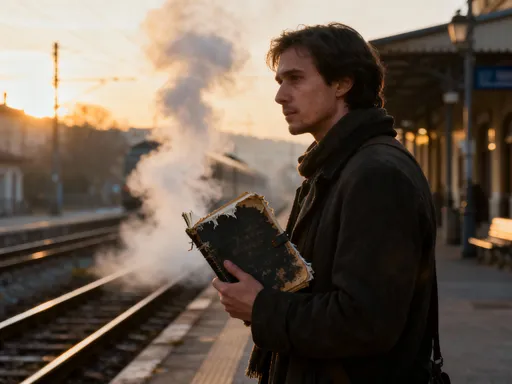
Remember the train pulling out of the station, the landscape blurring into memory. Now pause. The journey does not end when the suitcase is unpacked. For many, the return home is the most overlooked phase of travel—yet it holds the key to lasting transformation. A 2022 longitudinal study followed 300 travelers over 12 months. Those who engaged in a simple reflection practice within 48 hours of returning retained three times more emotional and psychological benefits than those who did not. The insight is profound: without integration, even the most powerful journeys fade into nostalgia, their lessons dissolving like morning mist.
The return is not a reset to normal, but a reentry with new eyes. Yet without intention, the familiar routines reclaim us too quickly. The alarm clock, the inbox, the grocery list—these pull us back into old rhythms before we’ve had time to process what we’ve seen and felt. That is why a Return Ritual is essential. Before unpacking the suitcase, unpack the experience. Sit with a notebook. Write down three sensations: the smell of spices in a market, the sound of waves at dawn, the feeling of sunlight on stone. Then, list one insight: something you learned about yourself, the world, or how you wish to live. Finally, name one small change you will carry forward—perhaps a slower morning, a new recipe, or a commitment to stillness.
This ritual creates continuity. It honors the journey not as an escape, but as a teacher. One woman returned from the Andes and began lighting a candle each evening, a practice she learned from a Quechua elder. It was not religious, but ritual—her way of pausing, remembering, and carrying something sacred into the everyday. Another man, back from rural Japan, started walking without headphones, tuning into the rhythm of his neighborhood as he once did on mountain paths. These are not grand gestures, but quiet echoes—proof that travel’s true value lies not in distance, but in depth.
The return, when done mindfully, becomes its own kind of journey—one inward. It asks not “Where did I go?” but “Who did I become there?” And more importantly, “How will I live differently now?” This is the quiet revolution of travel: not the places we see, but the selves we bring back.
The Lifetime Itinerary – Building a Travel Philosophy That Lasts
Your next journey begins not when you book, but when you reflect. This is the essence of a lasting travel philosophy—one built not on destinations, but on principles. Over decades, lifelong travelers develop habits that go beyond logistics. They prioritize depth over distance, presence over productivity, and connection over collection. Profiles from seasoned explorers—teachers, artists, retirees—reveal common threads: they travel slowly, revisit places, and measure success not by stamps in a passport, but by the quiet shifts in perspective. Their journeys are not escapes, but evolutions.
A personal travel manifesto anchors this philosophy. In under 100 words, it captures the soul of how one wishes to travel. One woman wrote: “I move slowly. I listen more than I speak. I seek the ordinary moments that hold extraordinary truth.” Another wrote: “I travel to remember my smallness in a vast world, and my connection to all within it.” These are not rules, but reminders—compass points for decision-making, from destination to daily rhythm. They help resist the pull of trends and honor what truly matters.
This is the quiet legacy of mindful travel: not the photos, but the presence; not the miles, but the meaning. As seasons turn and years pass, the destinations may blur, but the principles remain. Travel becomes not a series of trips, but a way of being—curious, humble, awake. And so, the wanderer listens. Not just to the world, but to the whisper within. For in that silence, every journey begins anew.